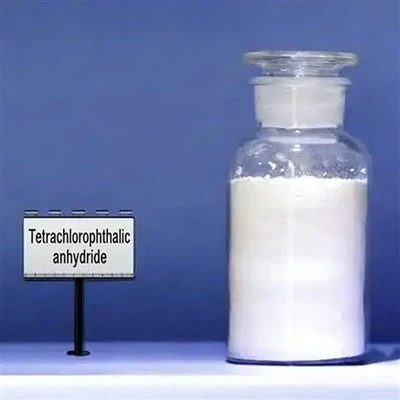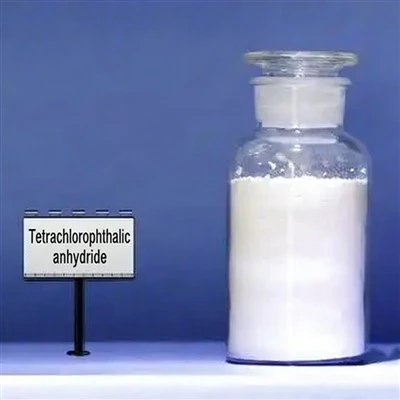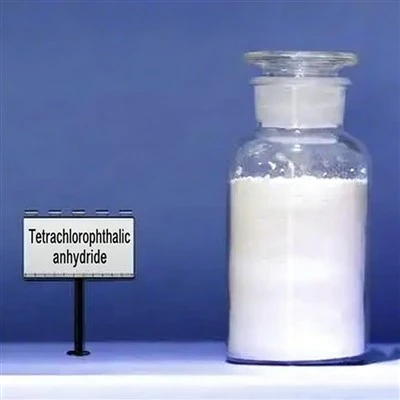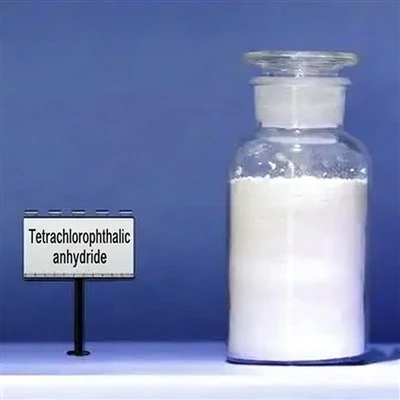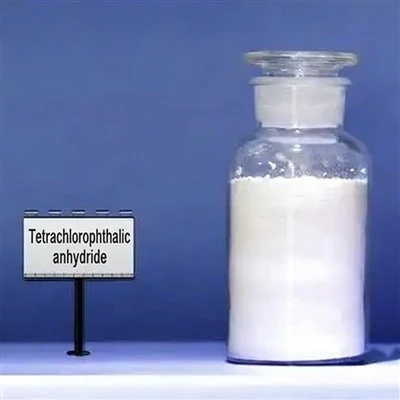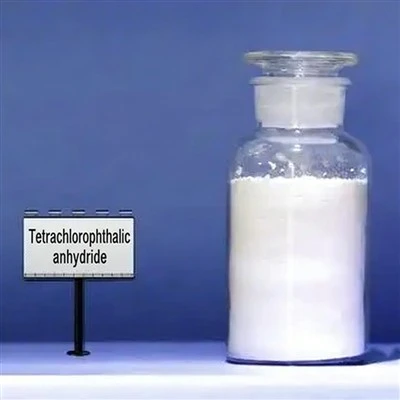

Tetrachlorophthalic anhydride (TCPA) possesses distinct physicochemical properties, laying a solid foundation for its applications. Physically, TCPA is a white crystalline powder with a density of 1.49 g/cm³, facilitating measurement and storage. Its unique solubility-easily soluble in dioxane, sparingly soluble in ether, and insoluble in cold water-offers advantages in specific solvents. Its melting point of 253-257℃ and boiling point of 371℃ clearly define its phase transition temperature, crucial for processing conditions. A high flash point of 362℃ indicates good flame retardancy. Chemically, TCPA is stable and moderately reactive, making it suitable as a reactive flame retardant or curing agent for unsaturated polyesters and epoxy resins, demonstrating unique value in polymerization reactions. These characteristics collectively determine TCPA's broad application potential across multiple industrial sectors.
Chemical Properties: Belongs to the acid anhydride class of compounds. The benzene ring contains four chlorine atoms, exhibiting a strong electron-withdrawing effect, making the anhydride ring more reactive.
It readily undergoes ring-opening reactions under alkaline conditions.
It can react with nucleophiles (such as ammonia and hydroxylamine) to form derivatives such as amides and hydroxamic acids.
It decomposes in water: in humid environments or hot water, it hydrolyzes to tetrachlorophthalic acid.
It is stable at room temperature and pressure, but contact with strong oxidants and moisture should be avoided.